Deep-Sea Mining
The International Seabed Authority is currently developing regulations to govern mining activities in areas beyond national jurisdiction. However, deep-sea mining is contentious. Those in favour of mining argue for the potential economic benefits and need for minerals necessary for the green energy transition. Those against are calling for a total ban or at least a moratorium warning of the unknown and potentially catastrophic, long-term impacts of environmental damage to deep-sea ecosystems that are fragile, poorly understood but essential for global ocean health.
A recent study, published in December 2025, into the biodiversity of a deep-sea mining exploration zone before and after the trial of a deep-sea mining machine found that the number of animals within the mining tracks decreased by 37%.
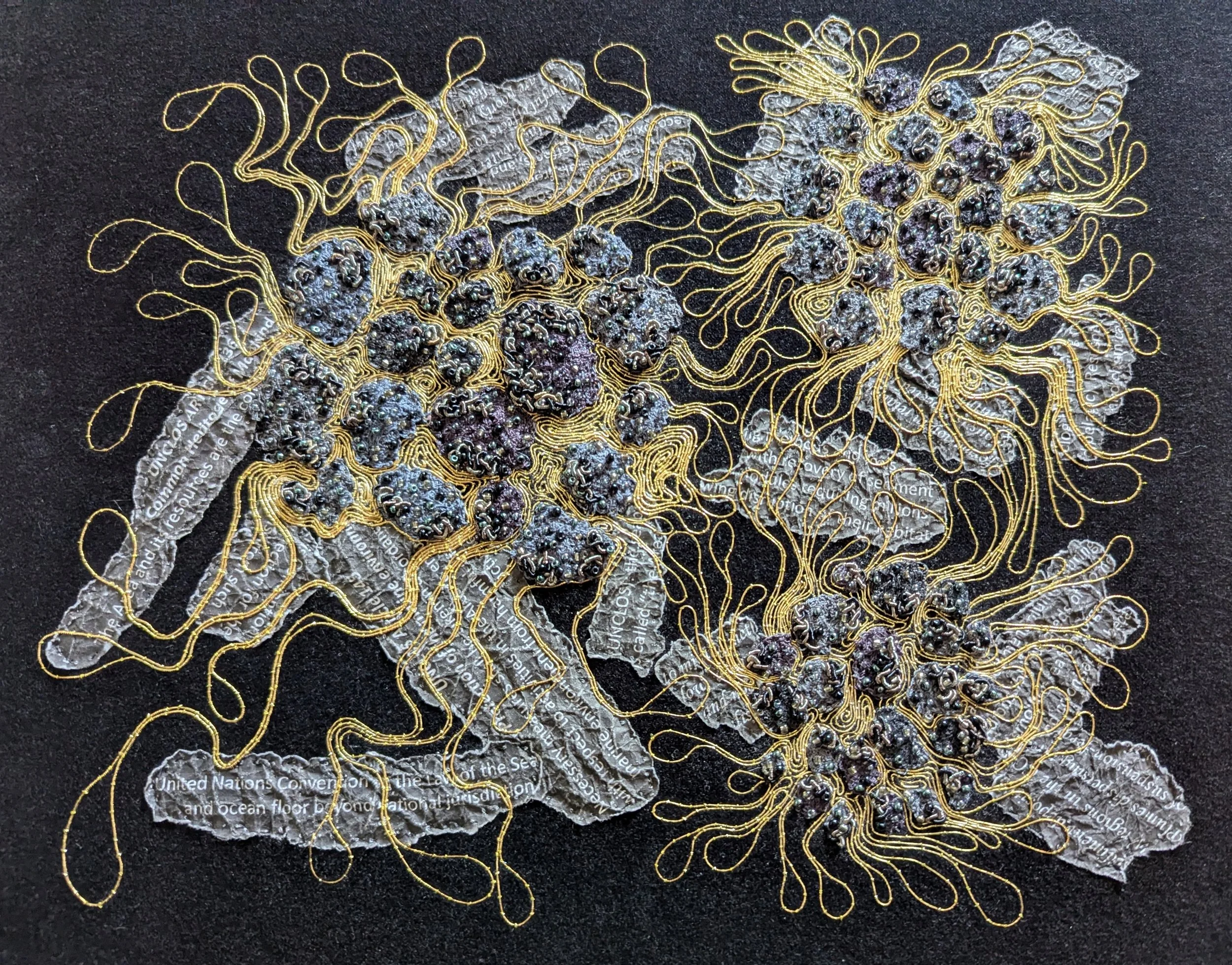

The main area currently under consideration for deep-sea mining operations is the Clarion-Clipperton Zone (CCZ) an area of approximate 6 million square kilometres in the deep Pacific Ocean. The seafloor in the CCZ is covered with potato-sized rocks known as polymetallic nodules. These are rich in manganese, cobalt, nickel and copper.
Most mining methods under development comprise huge machines called ‘harvesters’ rolling across the seafloor on caterpillar tracks, either hoovering or raking up the nodules and sending them to a ship on the surface via a kilometres long pipe. Impacts include sediment disturbance, compacted sediment, removal of nodules essential for some organisms, noise and light pollution.
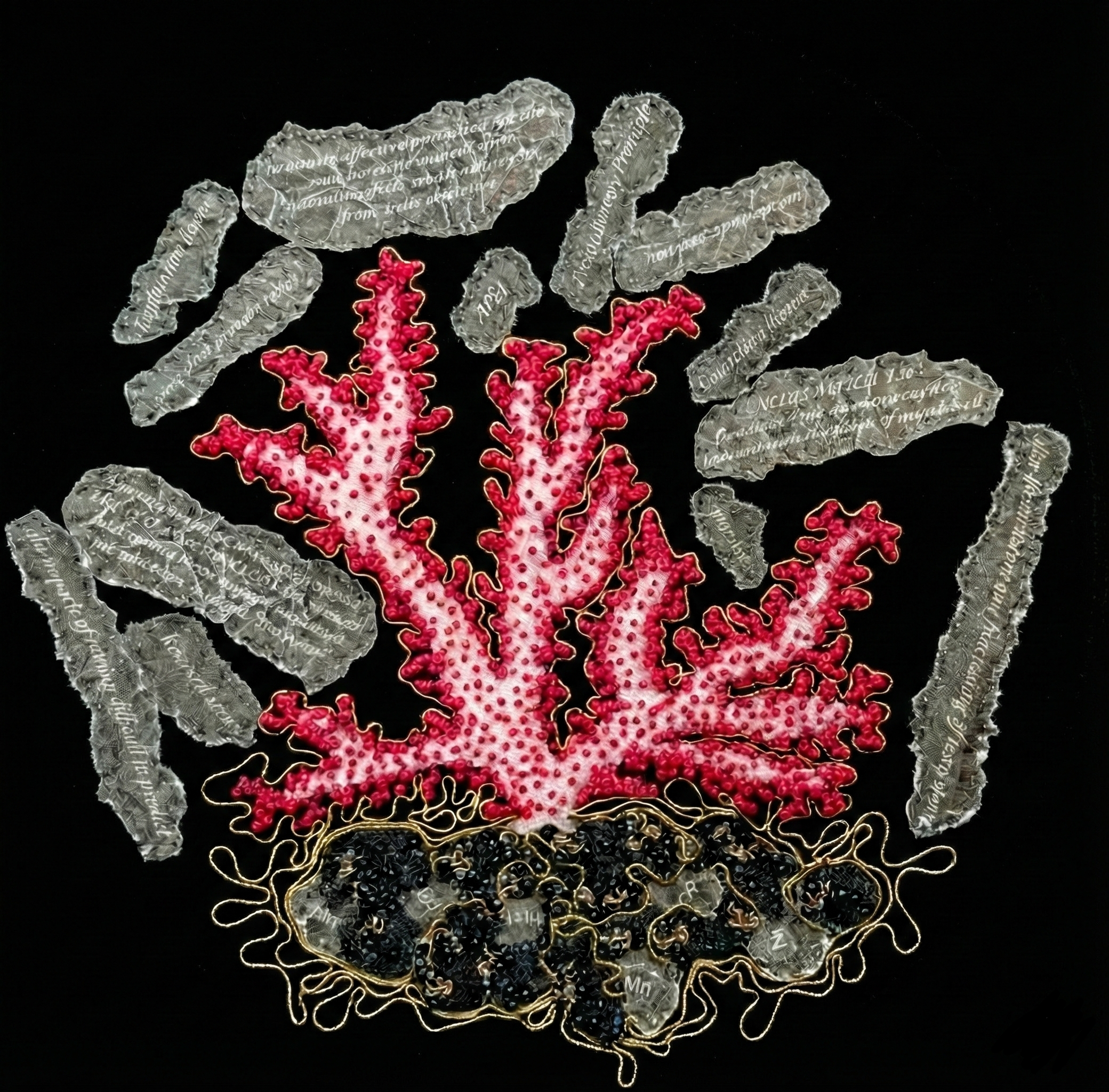
A bubble gum Coral (Paragorgia arborea) on a cobalt crust. P. arborea can reach 3 m tall and may be 100s even 1,000s of years old
Other regions beyond national boundaries under consideration for deep sea mining include areas on the Mid-Atlantic Ridge, in the Indian Ocean and the South Atlantic. Polymetallic nodules are not the only source of minerals in the deep sea being targeted for mining operations. Others include massive sulfides found around hydrothermal vents, and cobalt-rich crusts found on the sides of some seamounts.
If you would like to find out more about this topic here are some links:
Impacts of deep-sea mining machine
Deep-sea mining plans should not be rushed
The false promise of deep-sea mining
Biodiversity in deep-sea mining exploration areas