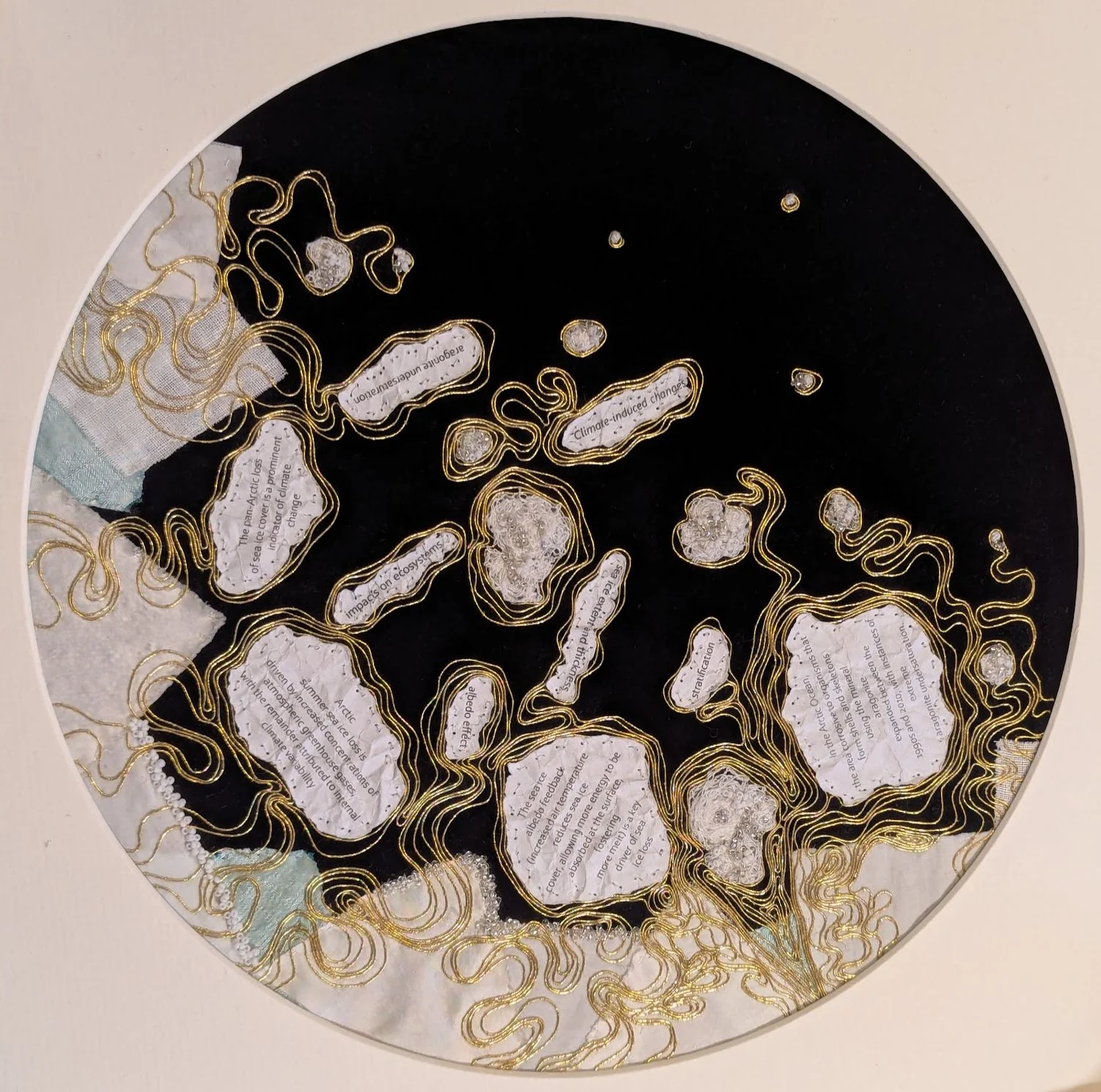
Arctic Sea Ice
Climate models predict the complete disappearance of late-summer sea ice by the middle of the century.
The albedo effect is the measure of how much sunlight a surface reflects. In the Arctic Ocean the sea ice reflects large amounts of solar radiation (high albedo) whereas the dark, open ocean absorbs it (low albedo). Reduced sea ice cover exposes the dark ocean surface. More heat is absorbed which creates more melting – exposing more open ocean. A positive feedback loop.
The temperatures in the Arctic are rising faster than anywhere else on Earth. The 2025 Global Tipping Points* Report suggests that some parts of the polar ice sheets may have already crossed their tipping points. These changes in the Arctic affect not only Arctic ecosystems but also the global climate system.
* A tipping point is a critical threshold that, once passed, can lead to large-scale, potentially irreversible changes, such as the melting of ice sheets or the collapse of the Amazon rainforest, which can amplify warming and create a cascade of other tipping points (2025 Tipping Points Report).

If you would like to find out more about this topic here are some links: